
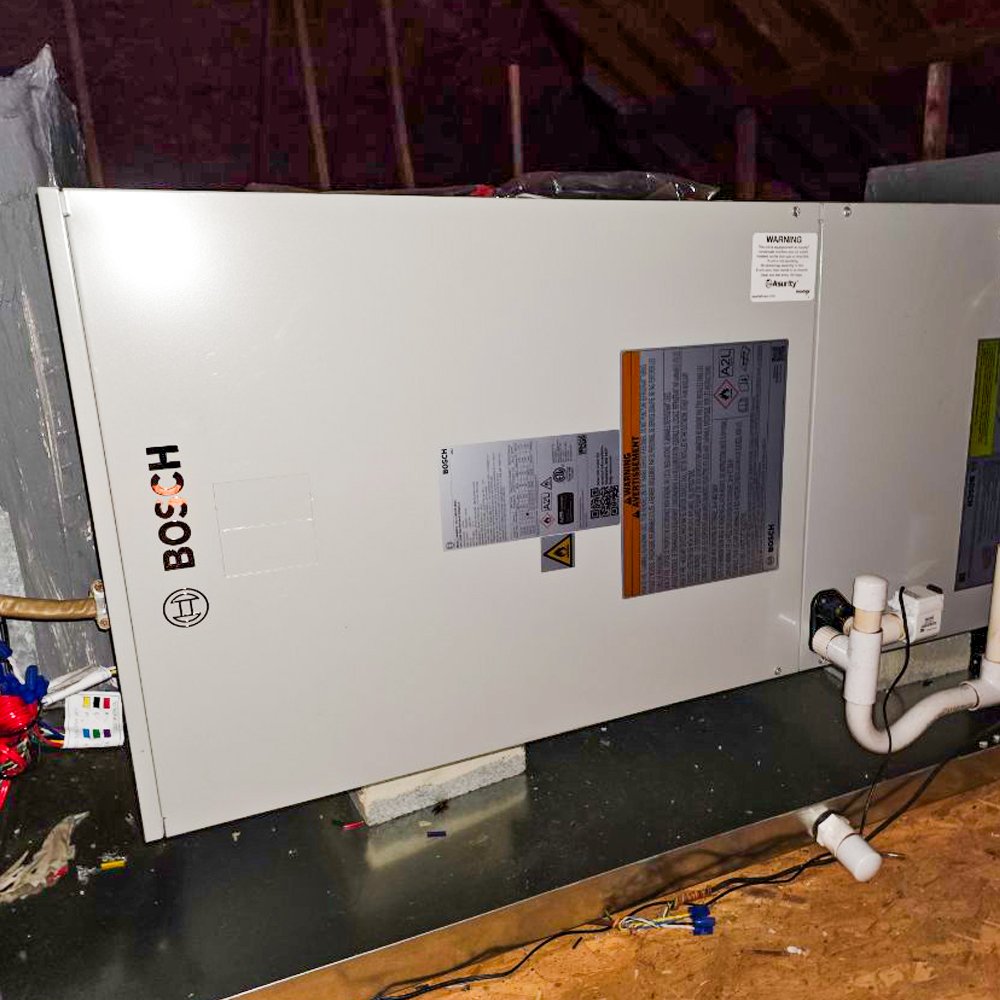
An oversized HVAC system creates two major problems for your home and your wallet: high indoor humidity and early equipment failure.
When it comes to buying an air conditioner or heat pump, a lot of people assume that "bigger is better." The thought process seems logical: a larger unit should cool your home faster and handle hot summer days with ease.
In the HVAC world, that logic is completely wrong.
An oversized system creates two major problems for your home and your wallet: high indoor humidity and early equipment failure.
High Humidity and Mold Risk
An air conditioner doesn't just lower the air temperature. It also acts as a dehumidifier. To pull moisture out of the air, the system needs to run long, steady cycles so air continuously passes over the cold indoor coil.
An oversized unit blasts cold air into your house so quickly that the thermostat turns off before the system has time to pull the humidity out of the air.
The result? Your home feels cold and clammy, and high lingering humidity creates the perfect environment for mold growth inside your ductwork and living area. For healthy indoor air, a unit has to be sized precisely for the space.
Short-Cycling Wears Out the Compressor
Every time your HVAC system kicks on, its components experience a surge of electrical and mechanical stress.
Because an oversized system cools the space too fast, it constantly turns on, runs for a few minutes, and shuts back off. This pattern is called short-cycling.
This constant stop-and-go puts massive wear and tear on the compressor—the most expensive part of your system. Instead of getting 18 to 22 years out of your equipment, short-cycling will wear out the compressor years ahead of its time.
Sized Just Right
At Erbe Air, our primary goal is to make sure your HVAC system lasts as long as possible and runs at peak efficiency.
That is why we never rely on guesswork or rough rules of thumb when selecting your equipment. We always consider your home's square footage, insulation, window placement, and airflow before we suggest a new unit. So your new system is sized exactly right—not too big, and not too small.
If your current AC runs in short, loud bursts and leaves your home feeling humid, it might be oversized.
Contact us to evaluate your system or discuss a proper setup.
Caleb | Erbe Air LLC
