
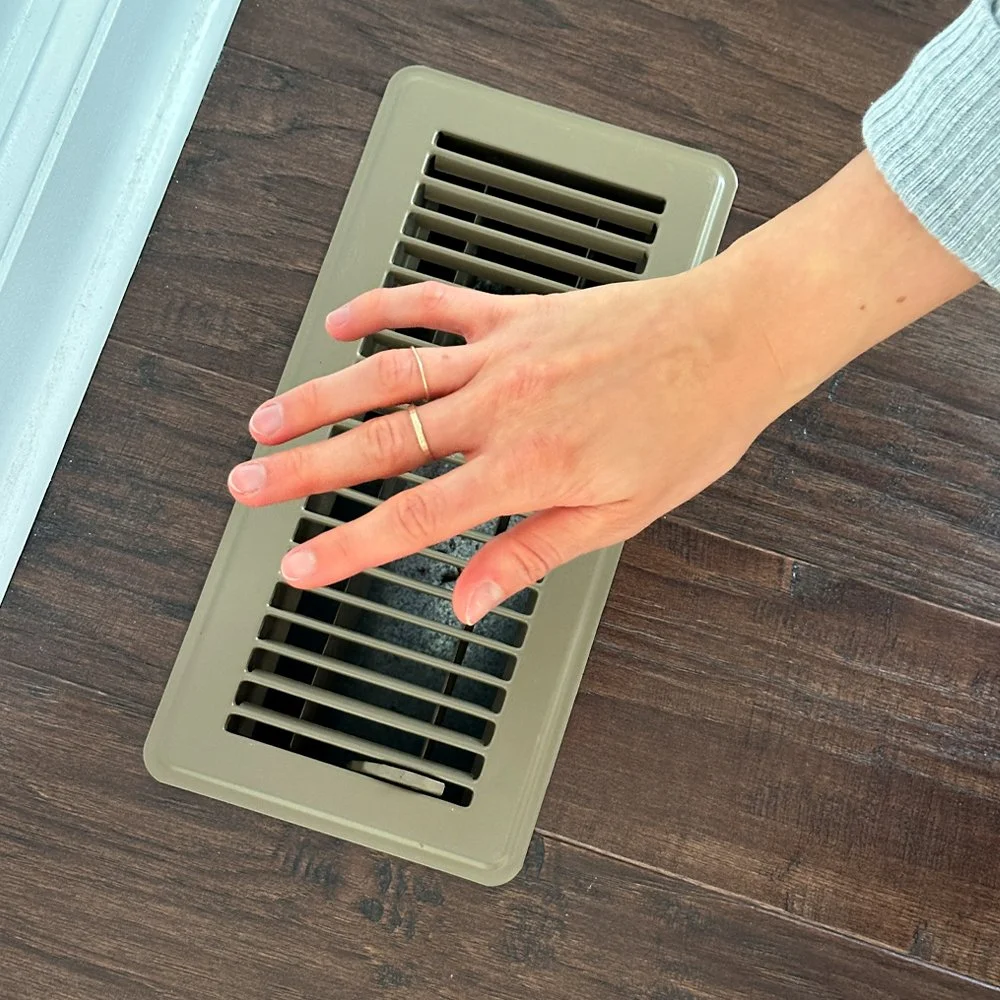
Because air blowing at 90°F is cooler than your hand’s average skin temperature, your heat pump’s air might feel cool to the touch, even though it’s easily warming your room to a comfortable 72°F.
If you recently switched from a gas furnace to a heat pump, you’ve probably asked yourself this exact question:
“Why isn't the air coming out of my vents hot?”
It’s one of the most common calls we get from homeowners, especially during the first cold snap of the season. The air feels lukewarm, almost like a cool draft, and people worry their brand-new or well-maintained system is failing.
I want to explain why this happens, why it’s completely normal, and how your heat pump is actually designed to work.
The “Body Temperature Illusion”
A traditional gas furnace burns fuel to create heat, blasting air out of your vents at 105°F to 140°F. When that air hits your hand, it feels undeniably hot.
A heat pump operates entirely differently. Instead of creating heat by burning gas, it uses the refrigeration cycle to extract heat energy from the outside air and transfer it indoors.
Because of how the refrigeration cycle meters heat, a properly operating heat pump delivers supply air at roughly 85°F to 100°F.
Here is where the sensory trick happens:
Average skin temperature on your hand is around 92°F to 95°F.
Air blowing over your skin at 90°F is actually lower than your skin’s baseline surface temperature.
Add the subtle wind-chill effect of moving air, and your brain registers that 90°F airstream as a “cool draft,” even though it is plenty warm enough to raise a 68°F room up to 72°F.
“Cruise Control” vs. "Drag Racing”
Think of a gas furnace like a drag racer: it blasts intense, 130°F heat in short, loud bursts, turns off, lets the house cool down, and turns on again.
A heat pump operates like cruise control on the highway. It runs in longer, continuous, highly efficient cycles at a steady, lower temperature.
Running longer cycles at 90°F to 95°F uses significantly less electricity than repeatedly cycling high-amperage heating elements on and off. It keeps your home at a steady, consistent temperature all day long while saving you money on your power bill.
Two Common Settings That Make Good Heat Feel Cold
If your house feels drafty, check these two things on your thermostat before calling for service:
Thermostat Fan Set to “ON” Instead of “AUTO”: When set to ON, the blower fan runs continuously 24/7, even when the heat pump isn't actively heating. It pushes room-temperature air through ductwork, creating a cold draft across your living room. Always leave your thermostat set to AUTO.
Big Temperature Jumps: Raising the thermostat 5 degrees at once doesn't make a heat pump work faster. It forces the system to engage emergency backup electric heat strips, which spike your monthly power bill. Set your temperature and leave it alone.
When Is “Lukewarm” Air Actually a Problem?
While 90°F air at the vent is completely normal, there are times when cool vent air points to an actual mechanical issue:
The Home Isn’t Hitting the Setpoint: If the thermostat is set to 70°F and the room drops to 64°F while the system runs nonstop, the unit isn't transferring enough heat.
Vent Air Drops to Room Temperature: If the air coming out of your vents feels genuinely cold (65°F or lower) on a mild day, you may have low refrigerant, a stuck reversing valve, or a clogged outdoor coil.
Short-Cycling During Defrost: In freezing weather, heat pumps periodically enter a brief “defrost cycle” to melt ice off the outdoor coil. Air might feel cooler for 5–10 minutes, but it should resume normal heating shortly after.
Trust Your Thermostat
Don’t judge your heat pump by holding your hand over the vent. Look at the wall thermostat. If your thermostat is holding your desired temperature, your heat pump is doing its job exactly as engineered.
Got questions about your heat pump’s winter performance or want us to inspect your system before cold weather sets in? Contact us to schedule an appointment.
Caleb | Erbe Air LLC
