

Most people assume they need expensive ductwork repairs or a brand-new HVAC system to fix hot and cold spots. In reality, the culprit often comes down to how long your system circulates air and the type of heating system you have.
If you have one room that is hot while another is an icebox, you aren’t alone. Uneven room temperatures are one of the most common winter complaints we hear from homeowners.
Most people assume they need expensive ductwork repairs or a brand-new HVAC system to fix hot and cold spots. In reality, the culprit often comes down to how long your system circulates air and the type of heating system you have.
Gas Furnaces: Fast Heat, Less Circulation
As we covered in our last newsletter, Why Does My Heat Pump Blow 'Lukewarm' Air?, traditional gas furnaces act like drag racers. They blast intense, 130°F heat into your home in short, rapid bursts, hit the thermostat temperature quickly, and shut back off.
Because the heating cycle ends so fast, the blower fan shuts down before it has a chance to thoroughly mix the air throughout your house. Warm air stays trapped in some areas of your home, while distant bedrooms or rooms over the garage never get enough airflow to catch up.
If you have a gas furnace, don't leave your thermostat fan set to standard AUTO all winter. Instead, use the Circulate setting on your smart thermostat to set the fan to run roughly 15 to 20 minutes per hour. Avoid running the fan 24/7 on "ON," which can create cold drafts.
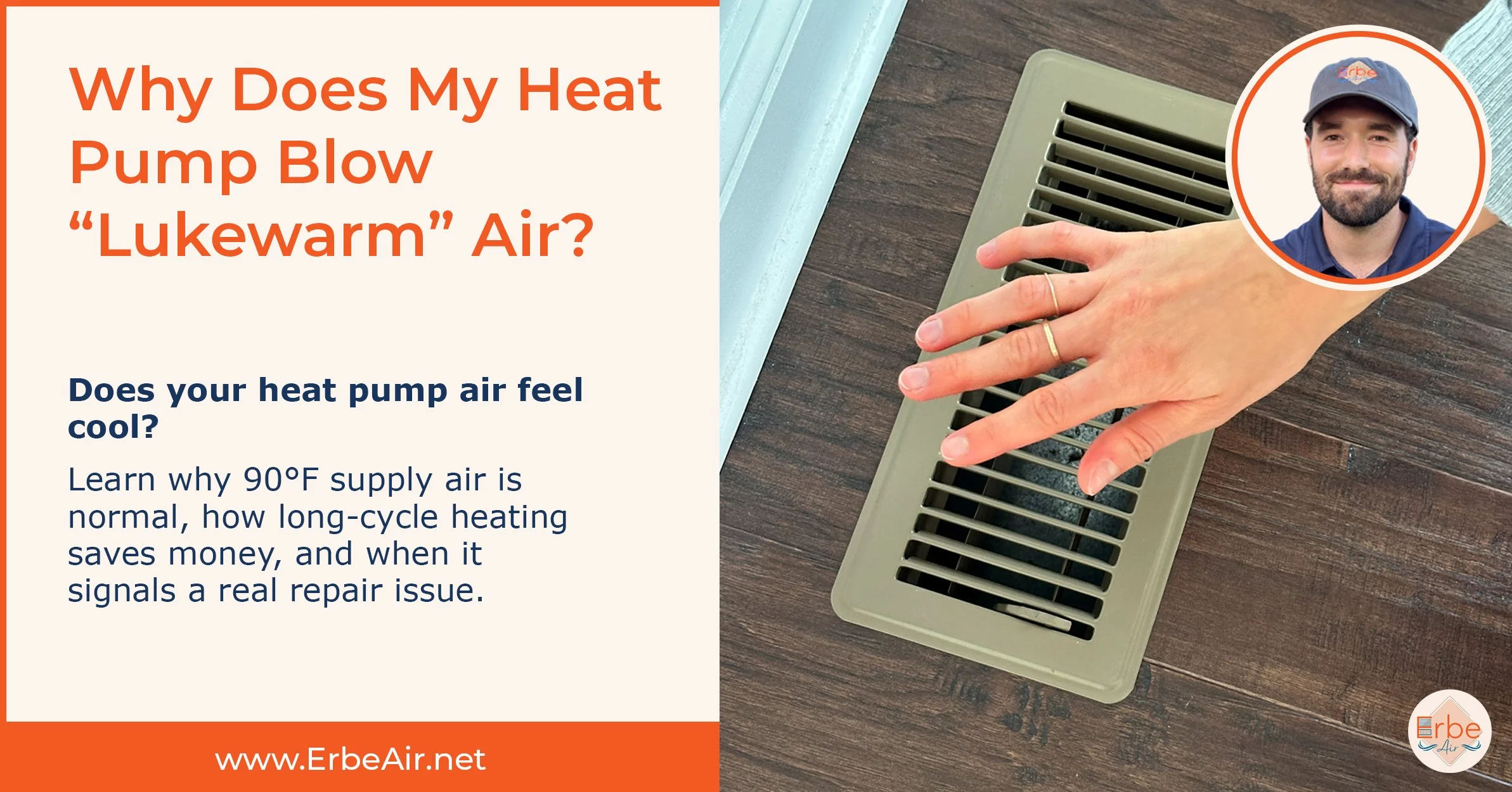
Because air blowing at 90°F is cooler than your hand’s average skin temperature, your heat pump’s air might feel cool to the touch, even though it’s easily warming your room to a comfortable 72°F.
Heat Pumps: Slower Heating, Better Balance
Heat pumps operate on the exact opposite principle. Because a heat pump supplies gentler air around 90°F instead of 130°F, it takes longer, steadier cycles to bring your house up to temperature.
That longer run time is engineered specifically to save money on your electric bill. But it comes with a major comfort bonus: natural air circulation.
Because your heat pump is already running for longer periods, it continuously pushes and mixes air from room to room all day long. Houses heated by heat pumps naturally tend to have much more even, consistent temperatures from hallway to bedroom.
Keep your thermostat fan set strictly to AUTO. Your system is already getting plenty of circulation time during its normal heating cycles, so forcing extra fan runtime isn't necessary and can actually make that 90°F airstream feel like a chilly draft when the outdoor unit pauses.
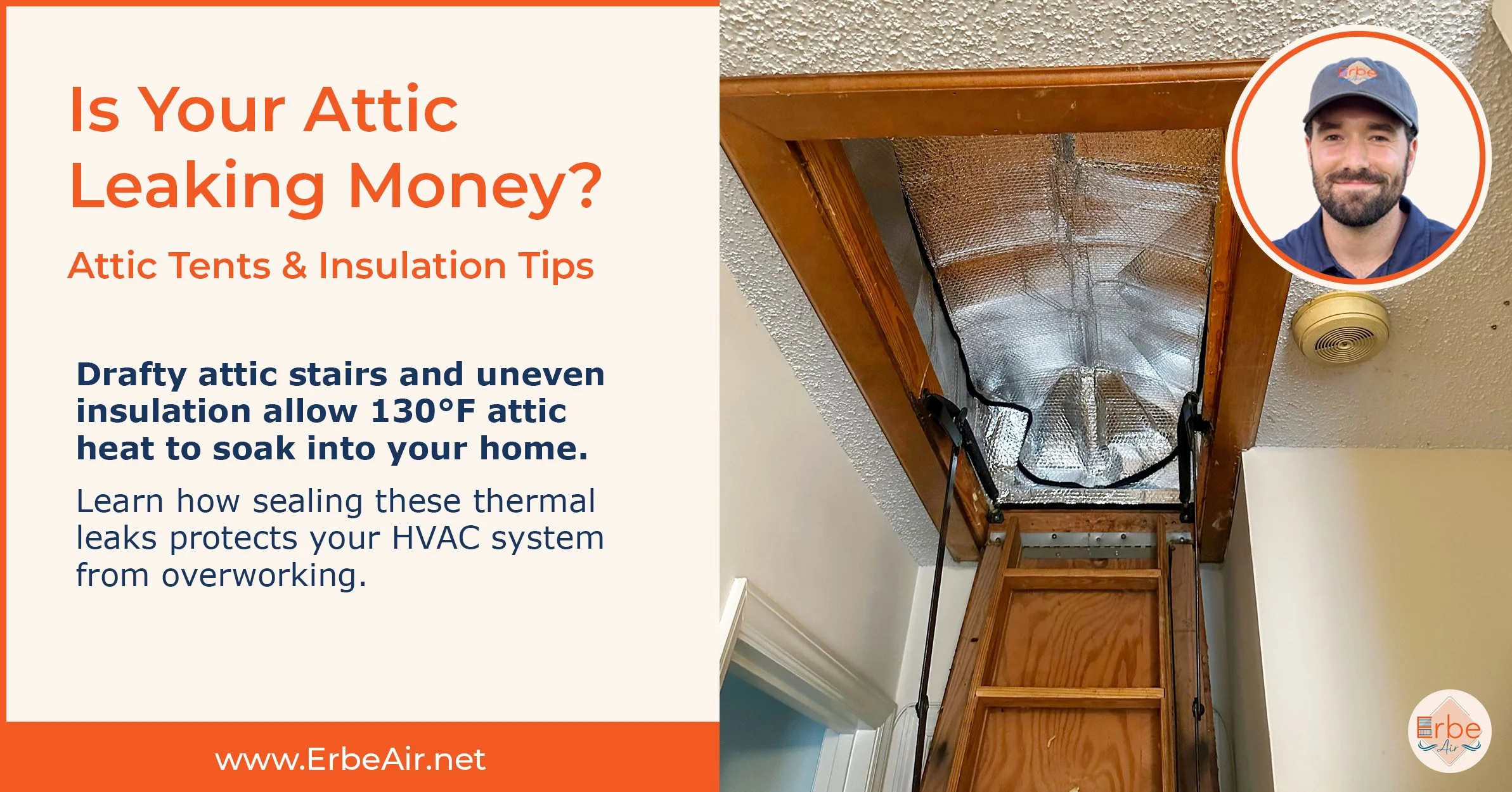
Attic Stair Tents are heavy-duty, insulated covers that create a permanent air seal over the stair opening.
When Fan Settings Aren’t Enough
Adjusting your fan circulation solves mild temperature swings in most homes. However, if a specific room stays 5 to 8 degrees colder no matter what you do, it usually points to an underlying mechanical issue, such as crushed ductwork in the crawlspace, a closed manual damper, or missing attic insulation above that room.
If you're dealing with hot and cold spots and want us to check your ductwork and airflow balance, contact us to schedule an appointment.
Caleb | Erbe Air LLC
