

Statistically, building code-required pan switches have a staggering 30% failure rate, causing preventable water leaks and ruined ceilings.
If your indoor AC unit is located in your attic, there is a metal emergency pan sitting right underneath it. You probably never think about it, but that pan is the only thing standing between a clogged drain line and a ruined ceiling.
Building codes require a safety float switch inside that pan. If the main drain line clogs, water is supposed to fill the pan, trip the switch, and shut your system down before it overflows.
It sounds like a foolproof backup plan. But in reality, it relies on a lot of "ifs."
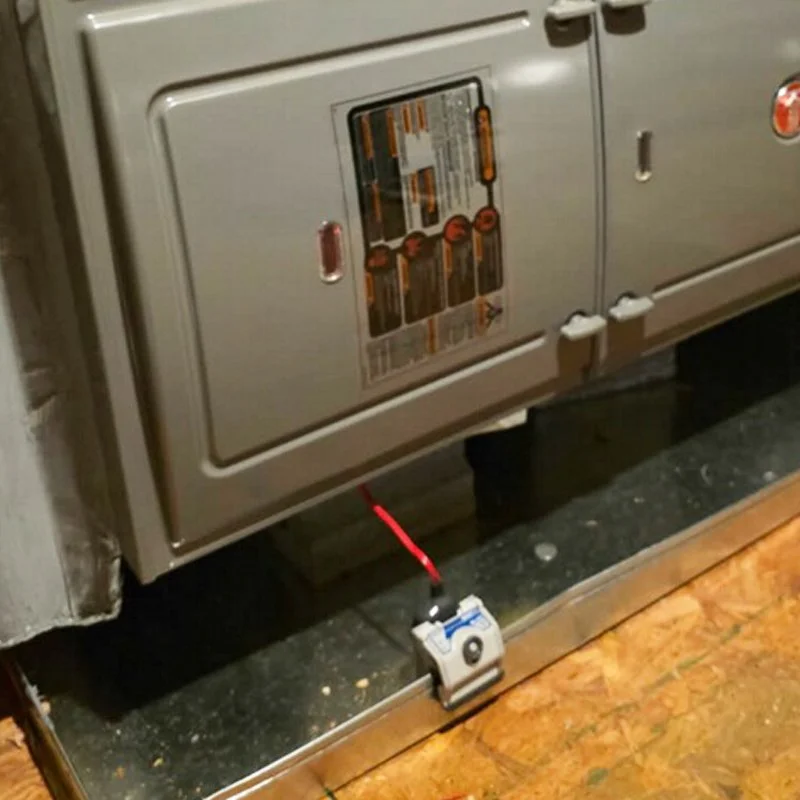
Relying on the emergency pan means you are waiting for water to actively escape the HVAC unit, pool underneath it, and hope the float switch works perfectly.
The Problem With the Standard Setup
Statistically, code-required pan switches have a staggering 30% failure rate. Whether the mechanical float gets stuck over years of sitting idle or dirt prevents it from rising, a 30% failure rate is a massive gamble to take with your home.
Some installations include an emergency drain pipe attached to that pan instead of, or in addition to, a switch. While that sounds good in theory because that secondary drain is rarely used, it almost always ends up clogged with dust, bugs, or debris by the time a real backup happens.
Relying on the emergency pan means you are waiting for water to actively escape the HVAC unit, pool underneath it, and hope the float switch works perfectly.
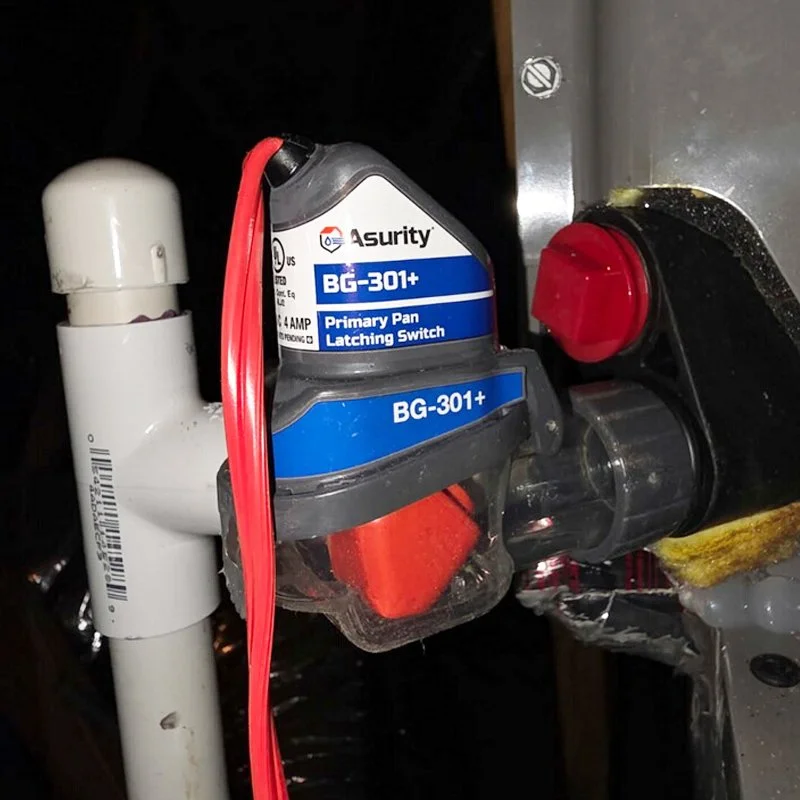
The secondary drain flood prevention switch is directly installed into the unit’s internal overflow port.
Our Philosophy: Contain the Water in the System
At Erbe Air, we believe that by the time water is collecting in your emergency pan, it’s already too late. You shouldn't have to rely on a metal tray catching a flood inside your attic.
Our philosophy is simple: Contain the water inside the system.
Instead of just putting a switch in the bottom of the tray, we install a specialized secondary drain flood prevention switch directly into the unit’s internal overflow port.
Here is how that small difference changes everything:
If your main drain pipe clogs up, water backs up inside the factory plastic drain pan inside the unit.
Before that water can ever spill out into your attic or drop into the emergency pan, our secondary switch senses the moisture and immediately cuts power to the system.
Your AC safely shuts off while the water is still completely contained within its own plumbing.
Prevention Beats a Backup Plan
When your AC shuts off out of nowhere on a hot day, it’s frustrating. But finding out it shut off because a switch did its job inside the pipe is a lot cheaper than finding out because water is dripping through your hallway ceiling.
We install these secondary inline switches on our systems because prevention beats a backup plan every single time.
If you want us to look at your current drain setup, test your safety switches, or make sure your attic system is properly protected before the peak of summer, contact us.
Caleb | Erbe Air LLC
